How ProVac works
ProVac is a vacuum roofing system that uses controlled air pressure to secure the membrane to the roof structure.
The system consists of a Protan SE or Protan EX membrane, mineral wool insulation, an airtight vapour control layer, an airtight structural deck and specially designed ProVac vacuum vents.
The airtight substrate is essential to the system's performance. When wind passes over the roof, a pressure difference is created between the membrane and the substrate. This controlled vacuum effect helps keep the membrane securely in place.
ProVac vacuum vents are positioned where negative pressure is highest, typically near roof edges and corners. Their role is to regulate the pressure beneath the membrane and ensure consistent performance across the roof.
Millions of square metres of ProVac roofing have been installed across Europe on both new-build and refurbishment projects.
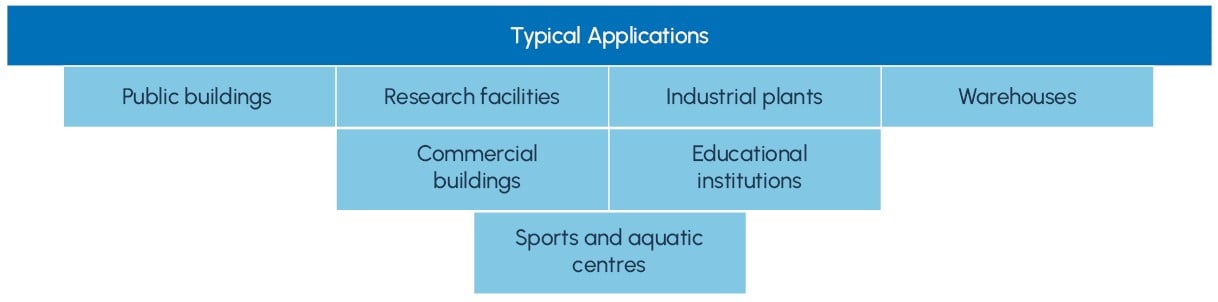
Typical applications
ProVac is particularly suitable for:
- Wind-exposed and coastal locations
- Concrete and other airtight roof decks
- Swimming pools and high-humidity buildings
- Industrial and production facilities
- Large flat and low-slope roofs
- Refurbishment projects with a sound existing substrate
As with all roofing systems, the suitability of ProVac depends on the building design and roof construction. Early consultation helps ensure the right system selection for each project.
Noise-free installation
Drilling noise can be a problem with roof renovation. Installing a Protan vacuum roof system reduces the amount of noise during installation, which is a major benefit for those using buildings such as offices, hospitals, schools and other institutions.